A rear-end car accident can happen in only a few seconds, but the consequences may last much longer. A driver may be stopped at a traffic signal, slowing for traffic, or waiting to turn when another vehicle strikes the back of the car. Even when the damage initially appears minor, a rear-end collision can result in vehicle damage, unexpected medical problems, insurance disputes, and questions about who was responsible.
For drivers in San Bernardino, understanding what happens after a rear-end crash can make it easier to document the collision and deal with the resulting claim. California traffic rules, evidence from the accident scene, witness statements, vehicle damage, and the circumstances leading up to the impact may all become important when responsibility is disputed.
This guide explains common issues following a rear-end accident, including how fault may be determined, what evidence can help, how injuries can affect a claim, and what drivers should know when dealing with insurance companies.
What Is a Rear-End Car Accident?
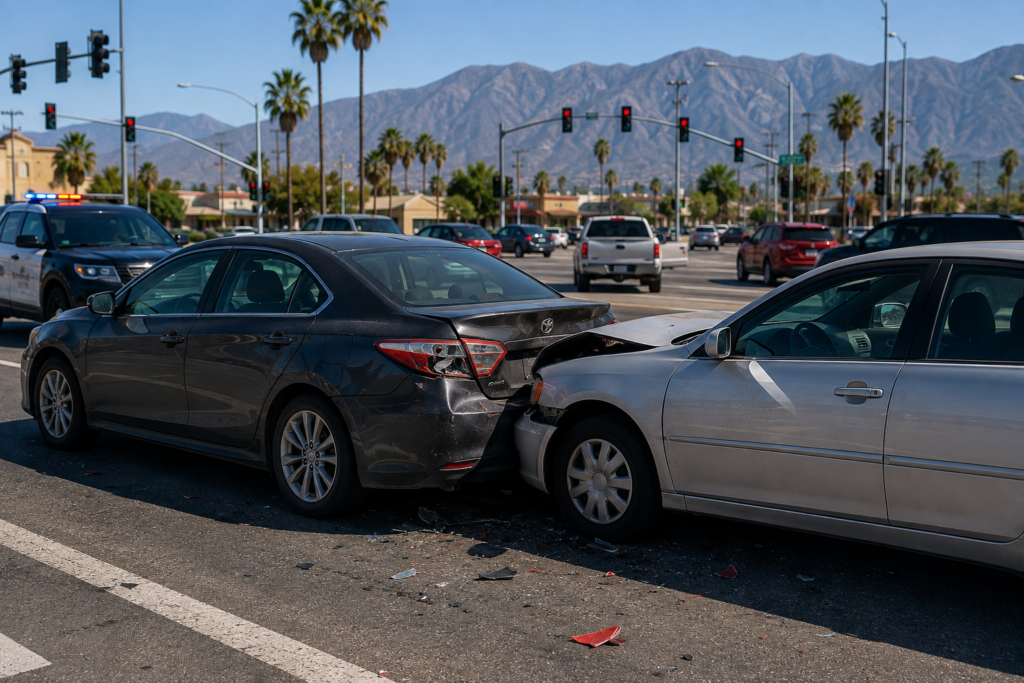
A rear-end accident occurs when one vehicle strikes the vehicle traveling or stopped in front of it. These crashes frequently happen in traffic, at intersections, near stop signs, at freeway exits, and when vehicles slow suddenly because of congestion or an unexpected roadway hazard.
The circumstances can vary significantly. One driver may be following too closely, while another situation may involve distracted driving, speeding, sudden traffic changes, mechanical problems, or several vehicles becoming involved in a chain-reaction collision.
Because every crash is different, the fact that one vehicle struck another from behind does not automatically answer every question about legal responsibility. Investigators and insurers may examine the conduct of all drivers involved.
Is the Rear Driver Always at Fault?
Rear drivers are often considered responsible when they fail to maintain a reasonable and prudent following distance. California Vehicle Code Section 21703 states that a driver must not follow another vehicle more closely than is reasonable and prudent, considering the speed of the vehicles, traffic, and roadway conditions. The official California Vehicle Code provides the applicable rule.
However, determining fault requires looking at the circumstances of the particular collision. For example, a vehicle in front may have stopped unexpectedly, changed lanes, or experienced a mechanical problem. Other vehicles could also have contributed to a chain-reaction crash.
Evidence is therefore important. A police report, photographs, dashcam footage, witness statements, vehicle damage, and roadway evidence may help establish what happened before impact.
How Fault Is Determined in a Rear-End Crash
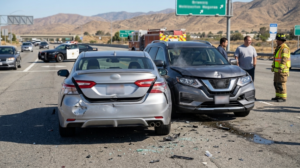 Insurance companies typically investigate the facts before determining how a claim should be handled. They may compare statements from the drivers, examine the damage to each vehicle, review photographs, and consider information contained in a police report.
Following Distance
The distance between vehicles can be important. A driver who follows too closely may have less time to react when traffic slows or stops. California law requires drivers to maintain a following distance that is reasonable and prudent for the circumstances.
Speed
Speed can also affect a rear-end collision. California’s basic speed law requires drivers to operate at a speed that is reasonable and prudent considering conditions such as weather, visibility, traffic, and the roadway. The rule is contained in California Vehicle Code Section 22350.
Distracted Driving
A driver who is looking at a phone, adjusting a navigation system, reaching for something, or otherwise failing to pay attention may have difficulty reacting to slowing traffic. If evidence shows that distraction contributed to the collision, it may become relevant to determining responsibility.
Road and Traffic Conditions
Traffic congestion, poor visibility, rain, debris, construction, and other roadway conditions may affect how quickly a driver can react. Drivers are expected to adjust their driving to conditions rather than relying solely on posted speed limits.
Evidence That Can Help After a Rear-End Accident
Evidence can become especially important when the drivers disagree about how the collision happened. If it is safe to do so, photograph the vehicles from multiple angles. Take close-up photographs of the damage as well as wider photographs showing the roadway and positions of the vehicles.
Look for evidence that may show the traffic conditions immediately before the crash. This can include traffic signals, lane markings, skid marks, debris, nearby signs, construction areas, and other vehicles.
Dashcam footage can also be valuable. A camera may capture the seconds before impact and show whether vehicles were moving, stopping, changing lanes, or following too closely. If you have dashcam footage, preserve the original file and make a backup so it is not accidentally overwritten.
For additional information about using camera evidence, read our related article about dashcam footage and San Bernardino car accident claims.
Injuries That Can Follow a Rear-End Collision
Rear-end crashes can cause injuries even when vehicle damage appears relatively limited. The occupants’ bodies can move suddenly when the vehicle is struck from behind. Possible injuries can include neck pain, back pain, headaches, shoulder problems, and other soft-tissue injuries.
Some symptoms may not become obvious immediately after a collision. A person may initially feel fine because of shock or adrenaline and experience discomfort later. Anyone experiencing symptoms after a crash should consider obtaining appropriate medical evaluation.
Medical records can also provide documentation of the timing of symptoms, diagnoses, treatment, and follow-up care. Keeping records of appointments, bills, prescriptions, and other accident-related medical expenses can help organize a claim.
Our article about the importance of seeking medical care after an auto accident provides additional information about documenting injuries following a crash.
What to Do Immediately After a Rear-End Crash
Safety should be the first priority. Move to a safe location when possible without creating additional danger. Call emergency services when someone needs immediate medical assistance or the circumstances require police or other emergency response.
Exchange information with the other driver when appropriate. Obtain the driver’s name, contact information, license information, vehicle information, and insurance details. If there are witnesses, ask for their contact information.
Take photographs of the vehicles and accident scene if it is safe. Avoid arguing with the other driver about fault. Instead, provide factual information to law enforcement and your insurance company.
For a broader overview of immediate post-crash steps, you can also review our guide to what to do immediately after an auto accident in San Bernardino.
What If the Other Driver Says You Caused the Crash?
A rear-end collision can become complicated when the drivers provide different accounts. The other driver may claim that you stopped suddenly, changed lanes, or otherwise caused the collision. You may have a different recollection of what happened.
Do not assume that an argument at the scene will resolve the dispute. Instead, focus on preserving evidence. Photographs, dashcam footage, witness information, police documentation, and vehicle damage may help establish the sequence of events.
Consistency is also important. When communicating about the collision, provide accurate information and avoid guessing about facts you do not remember. If you are uncertain about something, it is better to say so than to provide an unsupported estimate.
Our related article about what happens when the other driver lies about an accident in San Bernardino covers additional evidence considerations when statements conflict.
How Insurance Companies Handle Rear-End Claims
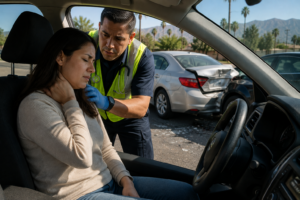 After a collision, you may need to notify your insurance company and provide information about the accident. The insurer may investigate the claim before deciding what coverage applies and whether another driver is responsible.
An adjuster may request photographs, repair estimates, medical documentation, a police report, or a statement about the accident. Keep copies of everything you submit. Maintaining an organized accident file can make it easier to respond to questions during the claim process.
Do not assume that the first settlement offer necessarily represents the full value of your losses. Before accepting a settlement, understand what damages are being addressed and whether additional medical treatment or other losses remain unresolved.
For more information about the broader claims process, visit our San Bernardino car accidents resource.
What Damages May Be Available?
The damages available after a rear-end collision depend on the circumstances and evidence. A claim involving injuries may include medical expenses, lost income, and other losses associated with the accident. Property damage may involve vehicle repairs, towing, storage, rental transportation, or other accident-related expenses.
In more serious cases, an injured person may also have losses associated with ongoing treatment, reduced ability to work, or the effects of an injury on everyday activities. The specific damages that may be available depend on the facts of the individual claim.
What If Multiple Vehicles Were Involved?
Not every rear-end collision involves only two vehicles. A crash can become a chain reaction when one vehicle strikes another and pushes it into a third vehicle. In these situations, determining responsibility can be more complicated.
Investigators may need to determine the sequence of impacts and identify which driver contributed to each collision. Vehicle damage, photographs, witness statements, dashcam recordings, and other evidence may help establish the order of events.
California applies comparative fault principles, meaning responsibility can potentially be divided among multiple parties depending on the facts. This makes careful evidence collection particularly important in multi-vehicle crashes.
Reporting Requirements After a California Crash
Some California collisions must also be reported to the Department of Motor Vehicles. The California DMV states that an SR-1 report must be submitted within 10 days when someone is injured or killed, or when property damage exceeds $1,000. The requirement applies regardless of who caused the collision and is separate from reports made to law enforcement or an insurance company.
The current requirements and online reporting information are available through the California DMV accident reporting page.
Preserving Evidence After the Collision
Do not immediately delete photographs, videos, messages, or other information connected to the accident. Keep the original versions of digital files whenever possible. If you have a dashcam, protect the recording from automatic overwriting.
It can also help to maintain a simple timeline. Record the date and approximate time of the collision, where it happened, when police arrived, when medical care was obtained, and when you communicated with insurance representatives.
Preserving evidence early can be particularly important if the other driver’s account later changes or if the insurance company questions how the collision occurred.
How an Auto Accident Lawyer May Help
A San Bernardino auto accident lawyer may help review the circumstances surrounding a rear-end collision, particularly when liability or the value of damages is disputed. Legal review may include examining photographs, police reports, medical documentation, insurance correspondence, witness information, and available video evidence.
An attorney may also communicate with insurance representatives and help organize evidence supporting the claim. If a dispute cannot be resolved through the insurance process, an attorney can explain potential legal options based on the facts of the case.
The personal injury law section of our website provides additional information about accident-related legal issues.
How Long Do You Have to Take Legal Action?
California law establishes deadlines for filing civil lawsuits, and the applicable deadline can depend on the type of claim and the parties involved. For example, California Code of Civil Procedure Section 335.1 generally provides a two-year period for an action involving injury or death caused by another person’s wrongful act or neglect.
However, exceptions and different deadlines can apply in particular situations. Claims involving government entities, minors, or other special circumstances may require additional analysis. Because missing an applicable deadline can affect legal rights, accident victims should not assume that every case follows the same timeline.
Frequently Asked Questions
Is the driver who hits the rear vehicle automatically responsible?
Not necessarily in every situation. A rear driver may be responsible when they failed to maintain a reasonable and prudent following distance, but the circumstances of each collision must be evaluated.
Can a rear-end accident cause serious injuries?
Yes. The severity of injuries can vary depending on factors such as vehicle speed, the type of vehicles involved, the position of occupants, and other circumstances surrounding the collision.
What if the other driver says I stopped suddenly?
Document the scene and preserve evidence. Photos, dashcam footage, witness statements, police documentation, and vehicle damage may help establish what happened.
Should I get medical attention after a rear-end accident?
If you have symptoms or concerns about an injury, appropriate medical evaluation can help identify and document potential problems. Some accident-related symptoms may not be immediately apparent.
What if three or more vehicles were involved?
A multi-vehicle collision may require a more detailed investigation because responsibility can potentially involve more than one driver. Evidence showing the sequence of impacts can be important.
Conclusion
A rear-end car accident in San Bernardino can involve much more than visible vehicle damage. Questions about following distance, speed, traffic conditions, injuries, insurance coverage, and comparative responsibility may all become important after a collision.
The best approach is to focus on safety, obtain appropriate medical attention, document the scene, preserve photographs and video, collect witness information, and maintain organized records. When drivers disagree about what happened, objective evidence can become especially important in determining how the accident claim should be evaluated.
Understanding the process can help San Bernardino drivers make informed decisions after a rear-end collision and avoid overlooking important evidence or reporting requirements.