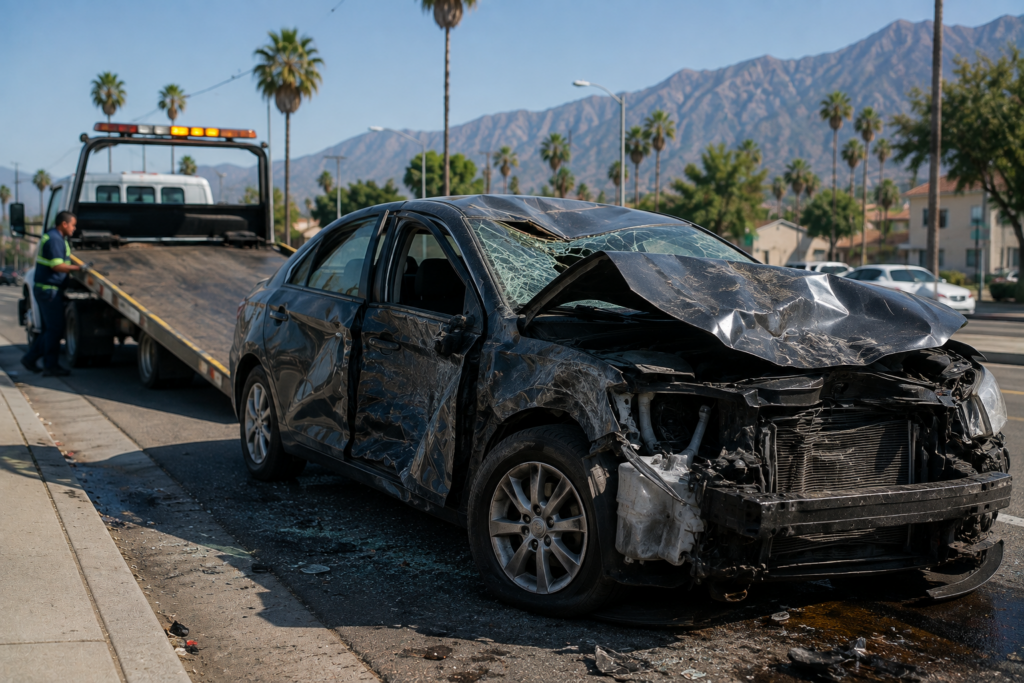
A serious car accident can leave you dealing with much more than physical damage. If your vehicle is severely damaged, the insurance company may determine that repairing it does not make financial sense. When that happens, the vehicle may be treated as a total loss.
Having a car declared a total loss can create a new set of questions. How does the insurance company determine the vehicle’s value? What happens to the damaged vehicle? What if you still owe money on an auto loan? Can you challenge the insurance company’s valuation? What happens if you disagree with the settlement?
For drivers in San Bernardino, understanding the total-loss process can make it easier to evaluate an insurance settlement and keep track of the documents associated with the claim. California insurance rules also establish standards for handling automobile claims and total-loss settlements.
What Does It Mean When a Car Is Totaled?
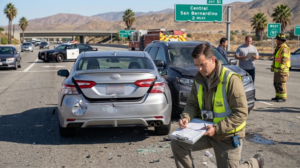 A vehicle is generally considered a total loss when the damage is so extensive that repairing or restoring the vehicle is not economically reasonable compared with its value. The California Department of Insurance defines a total loss as damage or destruction that makes a vehicle unable to be repaired or restored to its pre-loss condition without unreasonable costs.
The determination is not based simply on how badly a vehicle looks. An insurance company may consider the estimated repair costs, the vehicle’s value before the accident, salvage value, and other factors when evaluating whether the vehicle should be repaired or declared a total loss.
The California Department of Insurance provides consumer information about automobile claims and total-loss evaluations through its auto accident insurance guide.
How Insurance Companies Determine a Total Loss
After a crash, an insurance adjuster or appraiser may inspect the vehicle and prepare an estimate of the damage. The insurer may compare the estimated repair costs with the vehicle’s value before the collision.
California does not use a single universal percentage that automatically makes every damaged vehicle a total loss. Insurance companies evaluate the circumstances under applicable insurance rules and the terms of the policy.
The California Department of Insurance explains that an insurer generally pays the lesser of the amount necessary to repair the vehicle or its actual cash value, subject to the applicable policy provisions. Actual cash value generally means fair market value in California unless the policy defines it differently.
Vehicle Condition Before the Accident
The vehicle’s condition before the crash can affect its value. Mileage, age, condition, options, equipment, and prior damage may be considered when establishing fair market value.
Comparable Vehicles
Comparable vehicles in the relevant market can also be important. The insurer’s valuation should reflect comparable vehicles of similar kind and quality. If you believe the valuation does not accurately reflect your vehicle, review the information used to calculate the offer.
What Is Actual Cash Value?
Actual cash value, commonly called ACV, is an important term in a total-loss claim. In California, the Department of Insurance explains that actual cash value generally means the vehicle’s fair market value immediately before the loss, unless the policy provides another definition.
This means the amount you originally paid for your vehicle is not necessarily the amount an insurer will offer after a total loss. Vehicles generally depreciate over time, and market conditions can affect their value.
For example, someone who purchased a vehicle several years ago for $30,000 may not receive $30,000 after an accident. The relevant question is generally what the vehicle was worth immediately before the collision under the applicable valuation method.
More information about automobile insurance terminology is available from the California Department of Insurance.
What Should You Check in a Total-Loss Settlement?
When an insurer provides a total-loss valuation, do not look only at the final dollar amount. Review the information used to reach that figure.
Check whether the vehicle’s year, make, model, mileage, trim level, options, and condition are accurate. Also review the comparable vehicles used in the valuation. Differences in equipment or condition can affect the market value of a vehicle.
If information is incorrect, gather documentation supporting the correction. Receipts for upgrades, maintenance records, photographs showing the vehicle’s condition, and information about comparable vehicles may help demonstrate why you believe the valuation should be reconsidered.
What Happens to the Damaged Vehicle?
After an insurer determines that a vehicle is a total loss, the vehicle may be transferred to a salvage facility or another location selected as part of the claims process. The insurer may account for the vehicle’s salvage value when determining the settlement.
If you want to keep the damaged vehicle, that can affect the amount of the settlement. California insurance guidance explains that when an insured retains the salvage, the deduction from the settlement should be fair, measurable, and discernible.
Keeping a damaged vehicle can also involve title, registration, repair, and safety considerations. Before making that decision, understand the financial and practical consequences.
What If You Still Owe Money on the Car?
A total-loss settlement does not automatically eliminate an outstanding auto loan. If you financed the vehicle and the remaining loan balance is greater than its actual cash value, you may still owe the difference.
For example, suppose your vehicle is valued at $20,000 but you owe $24,000 on the loan. A $20,000 insurance settlement may not pay the entire loan balance. The remaining $4,000 could still be your responsibility, depending on the circumstances and any additional coverage you purchased.
What Is Gap Insurance?
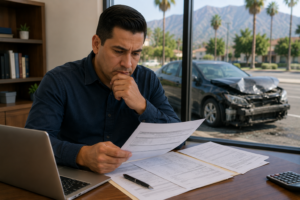 Gap insurance is designed to address situations where the amount owed on a vehicle exceeds its value. Whether gap coverage applies depends on the specific policy or financing agreement.
Do not assume that every auto insurance policy includes gap coverage. Review your policy documents and financing paperwork to determine whether this protection exists.
Can You Disagree With the Insurance Company’s Valuation?
Yes. A vehicle owner does not have to assume that every valuation is accurate simply because it came from an insurance company.
If you believe the insurer’s valuation is too low, review the comparable vehicles and other information used to calculate the offer. Identify specific errors rather than simply stating that the vehicle was worth more.
Evidence can include maintenance records, photographs, receipts for upgrades, documentation of optional equipment, and information about comparable vehicles that better match the condition and configuration of your vehicle.
Some auto insurance policies also contain an appraisal provision. The California Department of Insurance explains that an appraisal process may be available when there is a dispute about the amount of a total-loss settlement. The specific procedure depends on the applicable policy.
What If the Other Driver Caused the Accident?
If another driver caused the collision, you may pursue a claim against the responsible driver’s liability insurance, subject to applicable law and available coverage. The property-damage claim can involve the value of your vehicle and other covered losses.
Determining responsibility can become more complicated when both drivers provide different accounts. Evidence such as photographs, police reports, witness statements, vehicle damage, and dashcam footage can help establish what happened.
Our blog also covers evidence and fault issues in San Bernardino auto accident claims.
What If the Other Driver Is Uninsured?
If the driver responsible for the accident does not have insurance, your own insurance policy may provide certain coverage depending on the circumstances and policy terms. Collision coverage may also help with vehicle damage.
Uninsured motorist coverage is another important consideration. The California Department of Insurance explains that uninsured motorist coverage can provide protection when an insured is involved in a collision with an uninsured driver, subject to the policy’s terms and applicable requirements.
For more information about this situation, see our related San Bernardino uninsured-driver accident guide.
What If the Accident Also Caused Injuries?
A totaled vehicle does not determine whether someone was injured or how an injury claim should be evaluated. Vehicle damage and bodily injuries are separate issues that may involve different evidence and insurance considerations.
Keep medical records, bills, treatment information, prescription records, and documentation of missed work when applicable. If symptoms develop after the collision, appropriate medical evaluation can help document the condition and treatment.
Our personal injury law resources provide additional information about accident-related injury issues.
What Documents Should You Keep?
Organization can make a total-loss claim easier to manage. Keep a copy of the police report, insurance correspondence, valuation report, repair estimate, photographs, vehicle registration, loan documents, and any settlement offers.
You should also keep documentation showing the condition and features of the vehicle before the accident. Maintenance records and receipts may be useful if they establish the vehicle’s condition or identify equipment that was not properly reflected in the insurer’s valuation.
Do not discard documents simply because the insurance company already has a copy. Maintaining your own complete file can make it easier to review the claim later.
How Long Can a Total-Loss Claim Take?
The length of a total-loss claim varies. A straightforward claim may move relatively quickly when fault and coverage are undisputed. Delays can occur when the insurer needs additional information, the vehicle’s value is disputed, liability is contested, or multiple parties are involved.
Communication with the insurer should be documented. Keep notes of telephone conversations and save emails or letters related to the claim. Ask questions when you do not understand a valuation or settlement calculation.
What If the Insurance Company Delays the Claim?
California has fair claims settlement regulations governing automobile insurers. The California Department of Insurance explains that insurers have obligations concerning acknowledgment, investigation, communications, claim decisions, and settlement handling.
The Department’s consumer guidance explains that insurers generally must acknowledge a claim and begin investigation within specified regulatory timeframes after receiving notice, subject to the applicable rules and circumstances.
If you believe an insurer is not handling your claim appropriately, you can review consumer resources from the California Department of Insurance.
What Happens After You Accept the Settlement?
Once a total-loss settlement is accepted, the insurer generally processes payment according to the applicable policy and claim procedures. A lienholder may also be involved if the vehicle is financed.
Before signing a settlement or releasing claims, make sure you understand what the payment covers and whether any separate claims remain unresolved. Once a settlement agreement is finalized, changing the terms may be difficult.
Can a Totaled Car Be Repaired?
A vehicle that has been declared a total loss may sometimes be repairable from a physical standpoint. The issue is that the insurer has determined that repairing or restoring it is not economically reasonable under the applicable circumstances.
If the owner retains the vehicle, additional steps may be necessary before it can legally return to the road. Title and registration requirements can also apply. Anyone considering keeping a totaled vehicle should investigate these requirements before making a decision.
How Evidence Can Protect Your Position
Evidence is useful throughout the claim. Photographs from before and after the accident can document the vehicle’s condition. Dashcam footage may establish how the collision occurred. Witnesses may provide independent accounts of the crash.
For information about using video evidence, visit our San Bernardino dashcam accident guide. For information about broader accident claims, you can also visit our San Bernardino car accident resources.
Frequently Asked Questions
Does a totaled car mean the accident was severe?
Not necessarily. A vehicle can be declared a total loss because repair costs are unreasonable compared with its market value. The classification does not by itself establish how serious a person’s injuries were.
Can I keep my totaled vehicle?
Depending on the circumstances and insurance arrangements, an owner may be able to retain the salvage. However, doing so can reduce the settlement and may create additional title, registration, repair, and safety requirements.
Can I challenge a low total-loss settlement?
You can ask the insurer to review its valuation and provide documentation supporting your position. Review the comparable vehicles, vehicle specifications, mileage, condition, and optional equipment used in the calculation.
What if I owe more than the vehicle’s value?
You may remain responsible for the difference between the loan balance and the insurance settlement unless another source of coverage, such as applicable gap insurance, addresses the deficiency.
Does insurance pay for a replacement vehicle?
Coverage for replacement transportation depends on the applicable policy. Rental reimbursement coverage, if purchased, may provide benefits subject to the policy’s terms and limits.
Conclusion
Having a vehicle declared a total loss after a San Bernardino car accident can create financial and practical challenges. The insurance settlement may depend on the vehicle’s actual cash value, the evidence supporting that valuation, available coverage, the condition of the vehicle before the crash, and whether a lienholder is involved.
Review the valuation carefully, preserve your accident and vehicle records, and keep copies of all insurance communications. If you believe important information was overlooked, gather documentation that supports your position and ask the insurer to reconsider the valuation when appropriate.
Understanding how total-loss claims work can help you make informed decisions after a serious collision and better evaluate the insurance process from the initial damage inspection through the final settlement.