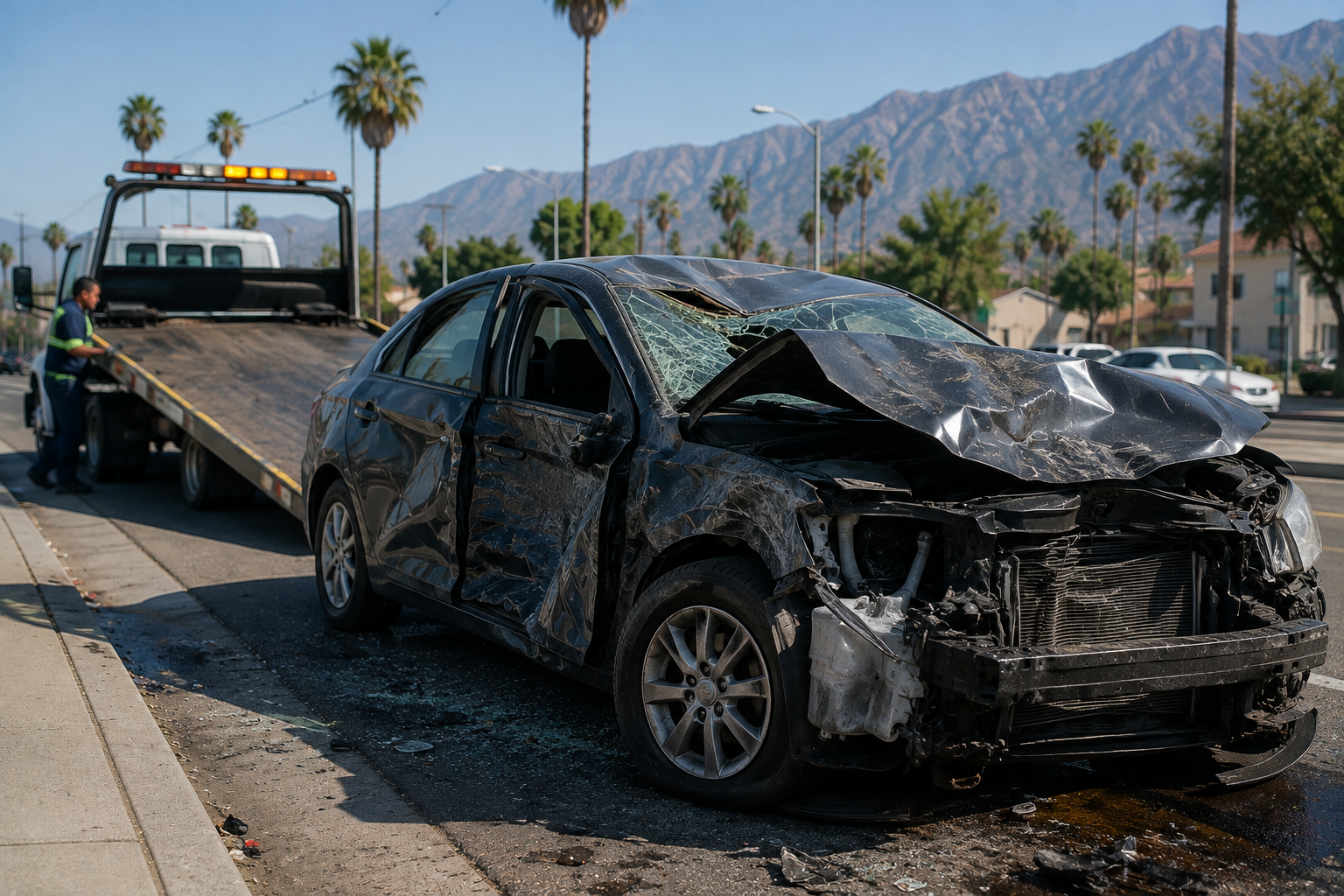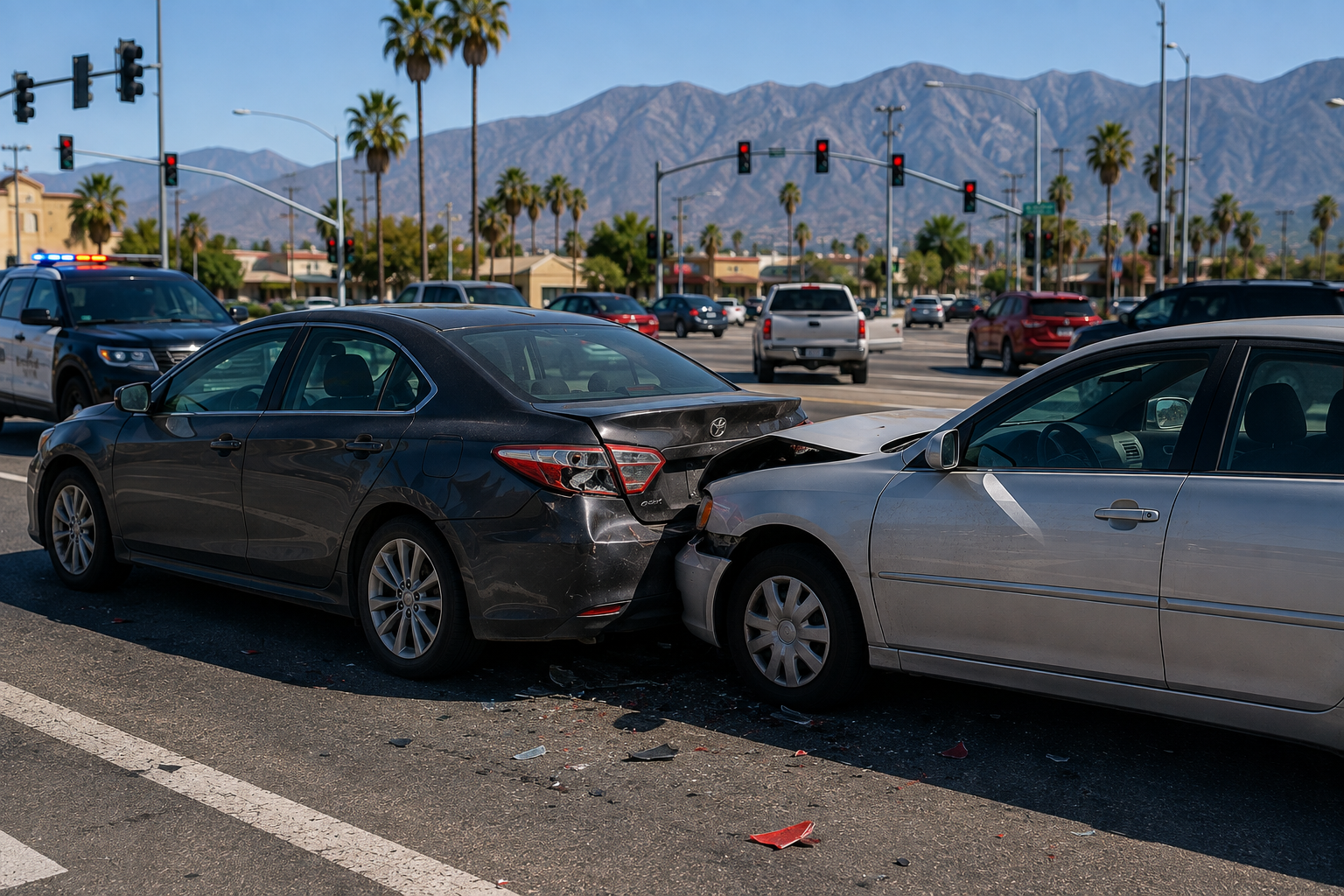
Passengers can be injured in car accidents just as easily as drivers. A passenger may be sitting in the front seat, riding in the back seat, traveling with a friend, or using a rideshare service when a collision occurs. After the crash, one of the first questions may be whether the injured passenger can file a car accident claim and which insurance policy may cover the resulting losses.
In San Bernardino, an injured passenger may have several potential sources of compensation depending on how the accident happened, which drivers were involved, and what insurance coverage is available. A passenger generally does not need to be the person who caused the collision to pursue compensation for injuries caused by someone else’s negligence.
The situation can become more complicated when the passenger was riding with a friend, relative, spouse, coworker, or rideshare driver. Understanding who may be responsible, what evidence should be preserved, and which insurance policies may apply can help passengers make informed decisions after a crash.
Can an Injured Passenger File a Claim?
 Yes. An injured passenger may be able to pursue a claim when another person’s negligence caused the accident and resulted in injury or other compensable losses.
The responsible party could be the driver of the vehicle in which the passenger was riding, another driver involved in the collision, or potentially more than one party depending on the circumstances. The passenger’s claim is separate from the driver’s claim, even though both people were involved in the same accident.
For example, suppose a passenger is riding in a vehicle when another driver runs a red light and crashes into it. The passenger may have a claim against the driver who caused the collision. If the driver carrying the passenger was also partly responsible, the circumstances may require a more detailed evaluation of shared responsibility.
Who May Be Responsible for a Passenger’s Injuries?
Determining responsibility is one of the most important parts of a passenger injury claim. The answer depends on the facts of the collision.
The Driver of the Vehicle Carrying the Passenger
If the driver transporting the passenger was negligent, the passenger may potentially have a claim arising from that driver’s conduct. Examples could include distracted driving, speeding, unsafe lane changes, failure to yield, or other negligent conduct.
Being friends or relatives with the driver does not automatically eliminate the passenger’s potential claim. Insurance generally exists to address covered losses arising from accidents, although the specific policy terms and circumstances determine what coverage is available.
Another Driver
Another driver may be responsible when their actions caused the collision. For example, a passenger may be injured when another motorist runs a red light, rear-ends the vehicle, makes an unsafe turn, or crosses into another lane.
Evidence from the accident scene can help determine which driver contributed to the crash. Our guide on how to prove fault in a San Bernardino auto accident case provides additional information about evidence and responsibility.
Multiple Drivers
Some crashes involve several vehicles. When multiple drivers contribute to a collision, the passenger’s claim may involve more than one potentially responsible party. Police reports, photographs, witness statements, vehicle damage, and video footage may help establish the sequence of events.
What Should an Injured Passenger Do After a Crash?
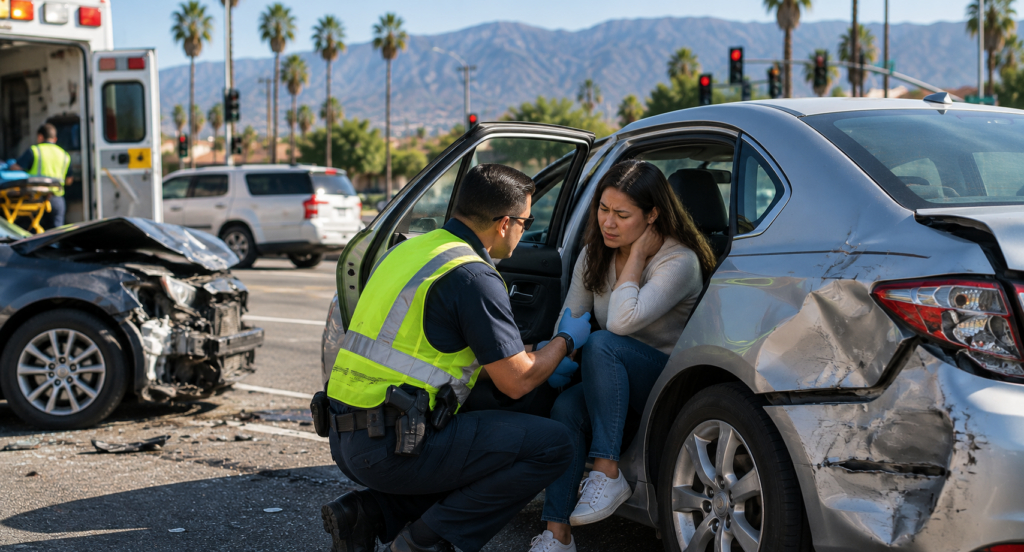
The first priority after any collision is safety. If you are injured, tell the driver and emergency responders about your symptoms. If emergency medical care is necessary, do not delay treatment simply because you are uncertain about who caused the accident.
Passengers should also gather information when they are physically able to do so. This can include the names and contact information of the drivers, vehicle information, insurance information, and contact details for witnesses.
Photographs can also be useful. If you can safely take photographs, consider documenting the vehicles, damage, intersection, traffic controls, road conditions, debris, and other relevant details.
Our step-by-step guide to what to do immediately after an auto accident in San Bernardino provides additional information about documenting an accident scene.
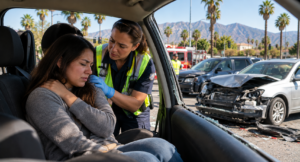
Inner Image 1 Placement: Insert the image showing a passenger receiving medical assistance after a San Bernardino car accident here.
Why Medical Documentation Matters for Passengers
A passenger should take injuries seriously even when the collision initially appears minor. Some accident-related symptoms may develop after the immediate shock of a crash has passed.
Medical records can document when symptoms were reported, what injuries were diagnosed, what treatment was recommended, and how the condition progressed. Keep copies of medical bills, treatment records, prescriptions, imaging reports, and other documents associated with the accident.
Medical documentation may become particularly important if an insurance company questions whether an injury was caused by the collision. A clear treatment history can help establish the timing and nature of the claimed injuries.
For more information about medical care after an accident, see our article on the importance of seeking medical care after an auto accident.
Which Insurance Policy Covers an Injured Passenger?
 The insurance coverage available to an injured passenger depends on the circumstances of the crash and the policies involved. California automobile insurance can include liability coverage, medical payments coverage, and uninsured or underinsured motorist coverage.
The California Department of Insurance explains that medical payments coverage can cover medical expenses for people in the insured vehicle, including passengers, subject to the policy’s terms and limits. It also explains that uninsured motorist bodily injury coverage may provide protection for the policyholder and people in the insured vehicle when an uninsured driver is at fault.
You can review California’s consumer information about automobile insurance through the California Department of Insurance automobile insurance guide.
The At-Fault Driver’s Liability Insurance
If another driver caused the collision, that driver’s liability insurance may be an important source of coverage for an injured passenger. California requires drivers to maintain financial responsibility, and liability insurance is the most common form.
The current California Department of Motor Vehicles explains the state’s minimum liability insurance requirements and financial responsibility rules on its auto insurance requirements page.
Medical Payments Coverage
Medical payments coverage, sometimes called MedPay, can provide coverage for certain medical expenses incurred after an automobile accident. California’s Department of Insurance states that this coverage may pay medical expenses for the driver and passengers, subject to the policy.
Uninsured or Underinsured Motorist Coverage
If the driver responsible for the accident has no insurance or does not have enough insurance to cover the injuries, uninsured or underinsured motorist coverage may become relevant. Whether the passenger can access a particular policy depends on the circumstances and applicable policy provisions.
This can become especially important when a passenger is seriously injured and the available liability insurance is insufficient to address the losses.
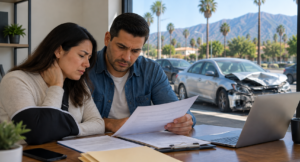
Inner Image 2 Placement: Insert the image showing a passenger reviewing insurance claim documents here.
What If the Passenger Was Riding With a Friend?
Passengers sometimes hesitate to pursue a claim because the driver is someone they know personally. They may worry that filing an insurance claim will create a conflict with a friend or family member.
However, the existence of a personal relationship does not by itself determine whether an insurance claim exists. The relevant questions include what caused the accident, who was legally responsible, what insurance coverage applies, and what injuries or losses resulted.
Passengers should avoid making decisions based solely on the personal relationship with the driver. Instead, they should focus on obtaining appropriate medical care, preserving evidence, and understanding the available insurance coverage.
What If the Passenger Was Partly Responsible?
In some circumstances, an insurer or another party may argue that the passenger contributed to their own injuries. The facts matter. Simply being a passenger does not automatically make someone responsible for the driver’s conduct.
California follows comparative fault principles in civil cases. When a person’s own conduct contributes to their damages, the amount recoverable can potentially be affected by the person’s share of responsibility.
The circumstances should therefore be evaluated individually rather than assuming that every passenger claim will be handled the same way.
What Evidence Should a Passenger Preserve?
Passengers should preserve as much relevant information as reasonably possible. Important evidence may include photographs of the crash, photographs of injuries, medical records, police reports, witness information, insurance documents, vehicle information, and communications related to the accident.
Dashcam footage may also be helpful. A passenger may know that the vehicle had a dashcam or that another vehicle involved in the collision had one. Nearby businesses or other motorists may also have captured the incident.
If video evidence exists, preserve it as soon as possible. Digital footage can be overwritten or deleted, particularly when cameras continuously record.
What If the Driver Says the Passenger Was Not Hurt?
A driver may believe a passenger was uninjured because the passenger initially said they felt fine. That does not necessarily establish that no injury occurred.
Some symptoms may become noticeable later. If symptoms develop, the passenger should seek appropriate medical evaluation and explain that the symptoms followed a motor vehicle collision. Medical records can then document the timing and progression of the condition.
Passengers should also avoid exaggerating symptoms. Accurate medical information is more useful than speculation or assumptions about the severity of an injury.
What If the At-Fault Driver Has No Insurance?
An uninsured driver can make a passenger claim more complicated. Depending on the circumstances, an injured passenger may have access to uninsured motorist coverage through an applicable policy. Medical payments coverage or health insurance may also play a role in addressing medical expenses.
The California Department of Insurance explains that uninsured motorist bodily injury coverage can cover injuries to the insured and people in the insured vehicle when an uninsured driver is at fault, subject to the applicable policy.
For additional information about uninsured-driver crashes in San Bernardino, see our related article, What Happens If You’re Hit by an Uninsured Driver in San Bernardino.
What If the Accident Was a Hit-and-Run?
A passenger injured in a hit-and-run may face an additional challenge because the responsible driver may not be immediately identified.
Passengers should provide law enforcement with whatever information they remember about the vehicle, driver, direction of travel, license plate, or circumstances of the collision. Witness information and video footage can also be valuable.
Insurance coverage may still be available depending on the policy and facts. Our article on hit-and-run accident law in San Bernardino provides additional information.
What If the Passenger Was in a Rideshare Vehicle?
Rideshare passengers may encounter additional insurance considerations because transportation network companies can have different insurance arrangements depending on the circumstances of the trip.
The California Department of Insurance notes that transportation network company insurance can involve different coverage periods and potential gaps depending on whether a driver is waiting for a passenger, traveling to pick one up, or transporting a passenger.
If the passenger was injured while using a rideshare service, it is important to preserve trip information, receipts, driver information, screenshots, and any communications connected to the ride. The applicable insurance coverage depends on the specific circumstances.
California’s Department of Insurance provides information about transportation network company insurance through its transportation network company insurance guidance.
Can a Passenger File a Claim Against More Than One Driver?
Potentially. If evidence indicates that more than one driver contributed to the collision, multiple insurance policies may become relevant. For example, a passenger could be riding in one vehicle when another driver causes a collision, while the driver carrying the passenger also contributed to the crash.
Determining responsibility in these circumstances requires examining the specific facts. Police reports, photographs, witness statements, vehicle damage, traffic-camera footage, and dashcam recordings may all help establish what happened.
How Long Should a Passenger Wait Before Acting?
A passenger should not unnecessarily delay taking important steps after an accident. Medical treatment, evidence preservation, insurance notification, and documentation can all become more difficult as time passes.
California also has legal deadlines for filing certain civil claims. The applicable deadline can depend on the nature of the claim and the parties involved, so passengers should not assume that every accident follows the same timeline.
For broader information about accident claim deadlines, read our article on how long you have to file a car accident claim in California.
How an Auto Accident Lawyer May Help
A San Bernardino auto accident lawyer can review the circumstances of a passenger injury claim and identify potentially applicable insurance policies. This may include examining the police report, medical records, witness information, photographs, vehicle damage, and insurance correspondence.
Legal assistance may be particularly useful when multiple drivers are involved, injuries are serious, insurance coverage is disputed, or the parties disagree about how the collision occurred.
Passengers can also benefit from understanding how their injury claim relates to the driver’s claim. Although both claims may arise from the same collision, the damages and evidence supporting each person’s claim can be different.
Frequently Asked Questions
Can I sue the driver who was giving me a ride?
Potentially, if that driver’s negligence caused your injuries. The fact that you were friends or relatives does not automatically determine whether a claim exists. Insurance coverage and the specific facts of the accident matter.
Can I file a claim against the other driver?
Yes, if the other driver caused the accident and you were injured, that driver’s liability insurance may be a potential source of compensation.
What if I do not have my own car insurance?
You may still have a claim as a passenger. Your own lack of an automobile policy does not automatically prevent you from pursuing a claim against a responsible driver or accessing other applicable coverage.
What if I was injured but the driver says the crash was minor?
The severity of an injury should be evaluated based on medical evidence rather than simply the appearance of vehicle damage. Seek appropriate medical attention and preserve the resulting records.
Can passengers receive compensation for lost income?
If an accident-related injury prevents a passenger from working, lost income may be part of the damages depending on the circumstances and available legal claim. Documentation of the lost income can be important.
Conclusion
An injured passenger in a San Bernardino car accident may have important legal and insurance options even though they were not driving the vehicle. Depending on the circumstances, a claim may involve the driver who caused the collision, the driver carrying the passenger, uninsured or underinsured motorist coverage, medical payments coverage, or other applicable insurance.
The most important steps are to prioritize medical care, preserve evidence, obtain information about the vehicles and drivers involved, keep organized records, and understand which insurance policies may apply. Passengers should also avoid assuming that a personal relationship with the driver prevents them from pursuing a claim.
Every accident is different. The circumstances of the collision, the available evidence, the severity of the injuries, and the applicable insurance policies can all affect how a passenger’s claim is evaluated.